What supporting people coming to Japan should actually mean
One of the most uncomfortable truths about life is also one of the simplest:
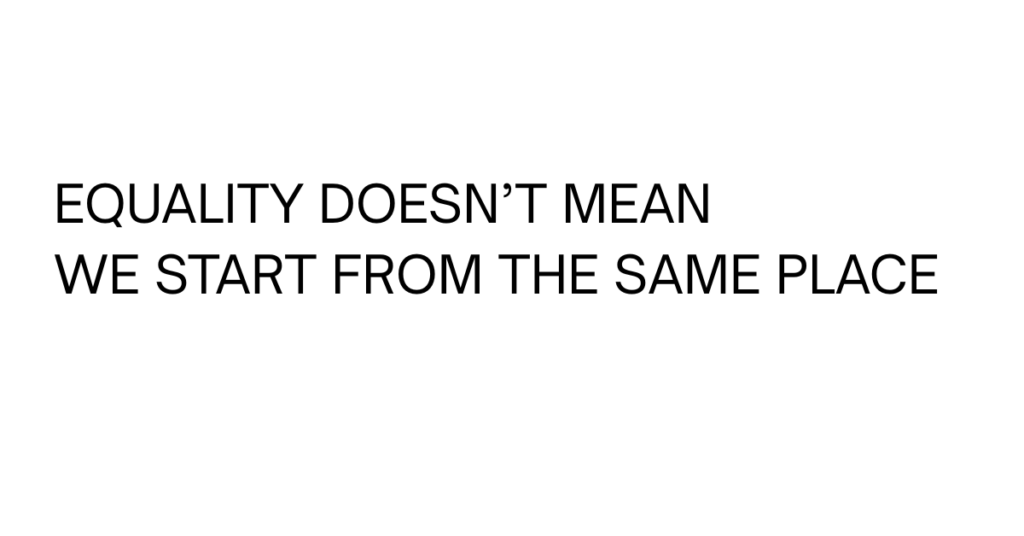
We do not start from the same place.
We are born into different countries, families, economic circumstances and education systems.
We grow up speaking different languages.
We develop different skills, networks and opportunities.
Some people inherit advantages they did nothing to create. Others inherit obstacles they did nothing to choose.
That is inequality.
But there is an important distinction that often gets lost in discussions about inequality:
Not every difference in outcome is discrimination, and not every disadvantage is evidence of injustice.
Understanding that distinction matters enormously when we talk about foreigners trying to build a life, career or business in Japan.
And it matters equally when Japanese people try to do the same thing overseas.
I learned this from the other side
I spent roughly three decades living outside the country where I was born.
When I first started working in the United States, I behaved in ways that felt completely normal to me as a Japanese person.
I watched the people around me.
I tried to anticipate what colleagues needed.
I avoided unnecessary confrontation.
I tried to be considerate without being asked.
In Japan, many of those behaviours can be interpreted as professionalism.
In America, I discovered that they could sometimes be interpreted very differently.
People walked all over me.
Things I did voluntarily were sometimes simply expected the next time.
Consideration could become something people took for granted.
I eventually had to learn something uncomfortable:
Behaviour that is valued in one culture does not automatically carry the same value in another.
That did not necessarily mean Americans were discriminating against me.
Nor did it mean Japanese culture was superior.
I had entered a different environment.
Understanding that environment was partly my responsibility.
Now reverse the situation
Today, many people arrive in Japan with significant professional experience.
Some have excellent academic credentials.
Some speak Japanese at a very high level.
Some have worked for major international organizations.
And yet they sometimes struggle to find the jobs they expected to find.
The immediate explanation is often:
Japan does not value foreigners.
Sometimes discrimination undoubtedly exists.
It would be dishonest to pretend otherwise.
But that explanation alone is too simple.
Japanese people themselves encounter some of the same barriers.
When I returned to Japan and looked for work, I was told more than once that I had too much experience.
I was told that I might find it difficult to work within the organization.
Think about that for a moment.
The very experience that should theoretically have made me more employable sometimes made employers more hesitant.
I am Japanese.
Language was not the problem.
Nationality was not the problem.
Something else was happening.
Companies do not hire qualifications. They hire people into organizations.
Job descriptions talk about skills.
Experience.
Education.
Languages.
Certifications.
But hiring decisions contain another question that is rarely written as clearly:
Can this person function inside our organization?
That question exists everywhere.
But what “functioning inside the organization” means changes dramatically between countries — and between companies within the same country.
An employer may worry about whether an experienced candidate will accept the existing hierarchy.
A manager may wonder whether someone with extensive international experience will challenge established practices.
A Japanese company may worry about communication styles.
A foreign-owned company operating in Japan may value exactly the same characteristics.
A different manager inside the same organization may reach a completely different conclusion.
This is why reducing every unsuccessful application to nationality can prevent us from understanding what actually happened.
Cultural fit can also become an excuse
There is another side to this.
“Cultural fit” should never become a convenient phrase for excluding anyone who is different.
If every organization hires only people who think, communicate and behave exactly like the people already inside it, nothing changes.
Internationalization becomes cosmetic.
Companies say they want global talent while continuing to evaluate global talent entirely through domestic assumptions.
That contradiction deserves scrutiny.
But scrutinizing it requires more precision than simply saying:
Foreigners are discriminated against in Japan.
Sometimes they are.
Sometimes they are not.
Sometimes the obstacle is language.
Sometimes immigration status.
Sometimes qualifications.
Sometimes age.
Sometimes salary expectations.
Sometimes corporate culture.
Sometimes the hiring manager.
Sometimes the candidate simply isn’t right for that particular organization.
And sometimes the organization isn’t right for the candidate.
Those distinctions matter.
Equality does not mean telling everyone the same thing
This is particularly important to me in the work I am building through Japan Watchdesk.
People approach Japan from completely different starting points.
A 25-year-old looking for their first job in Tokyo does not have the same problem as a 55-year-old executive considering relocation.
A foreign entrepreneur entering Japan does not face the same questions as an international family looking for somewhere to live.
A hospitality professional does not face the same employment market as an engineer.
A property investor does not need the same information as someone looking for a work visa.
Treating all of them “equally” cannot mean giving them identical advice.
It means something different.
Look at the person before looking at the category they belong to.
Not:
foreigner.
Not:
Japanese.
Not:
American.
Not:
Chinese.
Not:
European.
Not:
expat.
Not:
immigrant.
A person.
What are they actually trying to accomplish?
What advantages do they have?
What disadvantages do they face?
What assumptions are they making?
What do they understand about Japan?
What don’t they understand yet?
And what information would allow them to make a better decision?
Supporting someone does not mean telling them what they want to hear
This may be the most important distinction.
Someone considering Japan may desperately want Japan to be the answer.
That does not make Japan the right answer.
Someone may love Japanese food, architecture, culture and people.
That does not automatically mean they will enjoy working inside a Japanese company.
Someone may have an outstanding résumé overseas.
That does not guarantee the Japanese employment market will value it in the same way.
Someone may have enough money to purchase a beautiful house in rural Japan.
That does not mean buying it is a sensible decision.
Someone may have a business that works brilliantly in Europe or North America.
That does not mean Japanese customers will buy it.
Support should not mean encouragement at any cost.
Sometimes genuine support means saying:
This looks promising.
Sometimes it means:
You need more information.
And occasionally it means:
I would reconsider this.
The same principle applies to Japan itself
Japan should not be romanticized.
But neither should it be caricatured.
It is not a paradise where everything works perfectly.
It is also not a uniquely hostile society determined to exclude outsiders.
It is a country with its own institutions, incentives, habits, contradictions and cultural assumptions.
Anyone moving here enters that environment.
Anyone investing here enters that environment.
Any foreign company entering the Japanese market enters that environment.
Understanding those realities before making a major decision is far more useful than discovering them afterwards.
Equal respect. Individual assessment.
Perhaps this is ultimately the principle I want Japan Watchdesk to follow.
I cannot promise everyone the same outcome.
Nobody can.
I cannot remove differences in nationality, language, age, financial circumstances, professional experience or immigration status.
And I certainly cannot remove every structural disadvantage someone may encounter.
What I can try to do is something much simpler:
Start with the individual rather than the stereotype.
Understand the decision they are actually trying to make.
Investigate the conditions surrounding that decision.
Separate evidence from assumption.
Identify risks without exaggerating them.
Identify opportunities without selling a dream.
And when specialist expertise is required — immigration, legal, tax, recruitment, property or another regulated field — help identify the right professional rather than pretending to provide expertise I do not have.
That is the kind of equality I believe is actually useful.
Not pretending everyone starts from the same place.
Not pretending everyone will receive the same outcome.
But trying, as far as possible, to give every person the same thing at the beginning:
a fair assessment of the reality in front of them.
Relevant to your business?
Need a decision-ready answer for your situation?
Get a focused Move-to-Japan Initial Roadmap based on relevant Japanese-language sources, with key findings, risks and next questions.
Move-to-Japan Initial Roadmap · $179
Need help interpreting similar signals?
Japan Watchdesk helps overseas teams understand what Japanese-language developments actually mean for commercial decision-making.
Have you encountered something similar?
Share your experience, perspective, or question. Constructive discussion is always welcome.